
Blogs

What Is Web Archiving? Understanding the Format That Preserves the Internet
Web archiving might sound like a technical niche or a futuristic concern, but in reality, it’s already shaping how history is remembered. From saving deleted political statements to preserving pandemic response websites, web archives are a vital piece of our cultural memory. But what exactly is a web archive? How did this format come to exist? And what makes it “archival”?

A Human Approach to Email Archiving: What to Keep, Why to Keep It, and How to Start
Archiving email sounds tedious. Boring, even. But if you’ve ever found yourself scrolling through your inbox looking for something important, only to feel buried under newsletters, password resets, and photos from 2017, you already understand why organizing and preserving email matters. Whether you’re working as an archivist, helping a small organization manage its digital records, or just trying to get your personal email under control, this post is here to help.

What Is PREMIS, and Why Should You Care About It?
If you’ve ever tried to make a digital file last longer than the device it was created on, you already understand why digital preservation matters. But how do we actually preserve digital objects? How do we make sure they’re usable, understandable, and retrievable ten, twenty, or even fifty years from now?
That’s where metadata comes in. And for digital preservation, one metadata standard stands at the center: PREMIS.

Archival Description and Arrangement: Building a Realistic, Flexible Work Plan
There’s a lot out there about how to arrange and describe archival collections. This post is less about the nitty-gritty of how to decide where to file the “1974 Correspondence” and more about how to build a plan that lets you get the work done in a sustainable, realistic, and thoughtful way. We'll talk about what goes into a solid arrangement and description work plan, how to create one, what kinds of questions you should ask along the way, and how to estimate time and effort. Plus, I’ll share a few examples of collections I’ve worked on and how those plans changed in real time.

Tip #23: Keep an eye and a nose on your film.
If you’ve been following us for a while, you’ll probably know that paper, when left to its own devices, will yellow and turn brittle. But did you know film can do something similar too?

Archival Supplies: What They Are, What to Avoid, and Why It Matters
Archival supplies are essential to preserving the collections we care for, but navigating the market can be confusing. The word "archival" is often used as a marketing term and does not indicate adherence to any specific standard or certification. That means archivists, librarians, and caretakers of collections must be equipped with the knowledge to evaluate what materials are safe, stable, and appropriate for long-term preservation.

Designing a Digitization Project That Lasts
Digitization is never just scanning. It is a multifaceted project that requires thoughtful planning, purposeful execution, and a long-term strategy for preservation and access. In this session, we’re focusing on five core areas that underpin a successful digitization project: foundational planning questions, practical considerations, technical requirements, metadata and description, and ongoing preservation.

Empathy in Metadata
Language can be a weapon. Throughout history, societies have created and used vocabulary specifically designed to dehumanize, disenfranchise, and alienate marginalized groups. Archivists, librarians, and museum professionals who work with historical materials have a unique responsibility. We can describe materials in ways that preserve access to painful histories without reinforcing the violence of their original context. This blog explores potential biases in archival description and suggests ways to approach the work with more empathy, care, and justice.

What Is a Controlled Vocabulary?
A controlled vocabulary is a foundational tool in metadata creation and information organization. According to the Society of American Archivists, a controlled vocabulary is an enumerated list of terms preselected from natural language and chiefly used to aid discovery in information retrieval systems. These vocabularies may be locally managed or widely shared, depending on the needs and authority of the institution.

LAMs: Libraries, Archives, and Museums
Libraries, Archives, and Museums—often abbreviated as LAMs or GLAMs when Galleries are included—are spaces that preserve, share, and make meaning of the world's knowledge, culture, and history. These institutions support study, contemplation, education, and accountability, each approaching their missions through slightly different lenses. The materials they hold, how they describe those materials, and how the public interacts with their collections can vary widely, but they are united in their stewardship of our collective record.

Supporting Student Workers in Archives and Museums
Student workers bring fresh energy, diverse perspectives, and invaluable assistance to archives and museums. But managing student work arrangements requires flexibility, communication, and a thoughtful approach to project design and supervision. Here’s how to make the most of student contributions while setting them up for success.

Understanding EAD: Structuring Archival Metadata for the Digital Age
Encoded Archival Description, or EAD, is one of the key tools that archivists use to represent the contents and structure of a finding aid in a digital environment. While a traditional finding aid might be a PDF or printed document, EAD allows this same information to be machine-readable, structured, and ready for integration into databases and discovery tools.

When Items Have No Past: What to Do with "Found in Collection" Materials
If you work in a museum or archives, you've likely come across a mystery object tucked into a cabinet or folder with no documentation. It may have been there for years—or decades—with no provenance, accession record, or paperwork of any kind. In the field, we call this kind of material "Found in Collection" (FIC). Here's what that means, why it matters, and what you can do about it.

What Are We Talking About When We Say "Finding Aid"?
When archivists use the term "finding aid," they are referring to a detailed guide that provides both structural and contextual information about archival materials. According to the Society of American Archivists, a finding aid serves as a surrogate for the materials themselves, offering a way to navigate what can often be complex, expansive collections.

Describing Materials Using Dublin Core
Dublin Core is a flexible, widely used standard for creating metadata—data about an information resource. It is designed to be easy to implement while also being powerful enough to describe a broad range of resource types. Whether you are cataloging a book, a photograph, an object, a film, or something else entirely, Dublin Core provides a structured approach to metadata that promotes consistency and discoverability.
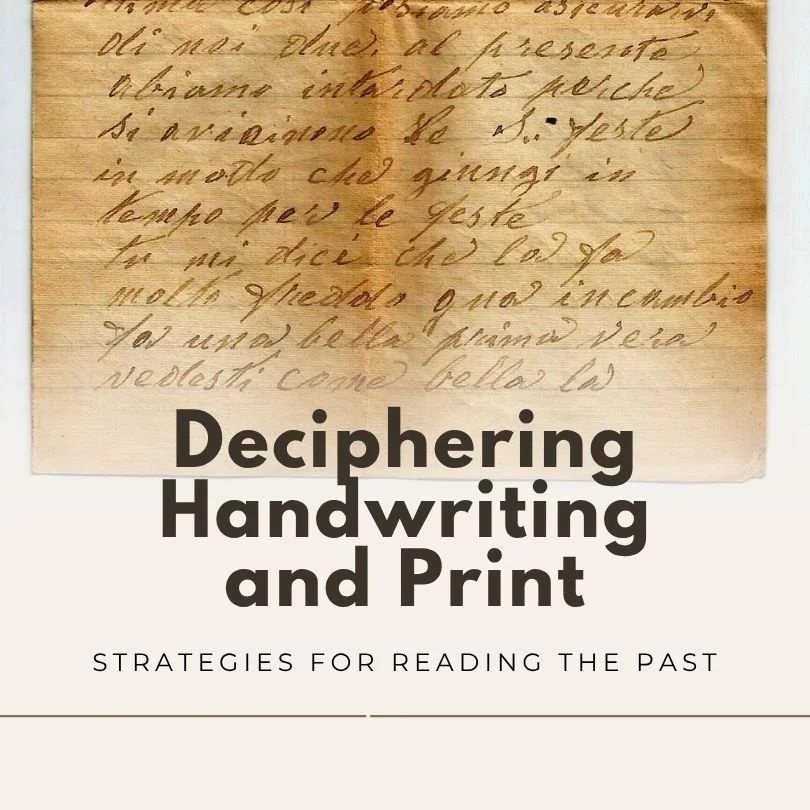
A Brief History of Handwriting: From Roman Capitals to Modern Cursive
Reading historical documents requires more than just sharp eyes. It often requires learning how to recognize and interpret writing styles that have changed significantly over time. This post offers a broad overview of western paleography and handwriting from the post-Roman Empire to the mid-20th century, covering writing styles in Europe and the Americas written in Romance and Germanic languages using Latin script.

Provenance and Original Order: Why They Matter in Archives
When archivists talk about provenance and original order, they are talking about more than just where something came from or how it is organized. These two principles are at the core of archival work, guiding how we preserve, describe, and provide access to historical records. In this blog post, we explore what these concepts mean, how they developed over time, and why they remain essential today.

Understanding Archival Hierarchy: Context, Structure, and Ethics
Archival hierarchy is one of the foundational principles of the archival profession, shaping how we describe and relate archival materials. In this blog post, we explore what archival hierarchy is, where it comes from, how it works in practice, and why it matters. Whether you are new to archives or looking to deepen your understanding, this guide offers a comprehensive introduction to the layered nature of archival description.

Sanborn Maps
If you've ever wondered what your block looked like 100 years ago, Sanborn Fire Insurance Maps are the perfect place to start. Originally created for assessing fire insurance liability in urban areas, these maps have become invaluable tools for historians, genealogists, preservationists, and anyone interested in the built environment of the past.

Tip #22: Leave repairs to the experts
So the worst has happened. The spine of your book has broken. A page has been torn out. But you’re not quite ready to call a conservator. What can you do?