
Blogs

This week’s #FridayFind is… a kill count in an obituary?
If you're familiar with Friday Finds, you know 20th-century obituaries can be incredibly detailed. Captain Robert Bruce Ferry’s is a prime example:
Death? "Died Sunday morning, after 24 days of illness."
Bio? "Family traced back to 1090 Normandy royalty."
Accomplishments? "Served in many Civil War battles, including Gettysburg."
Deer count? "Killed 1,029 deer between 1851 and 1910."
A real-life war hero with a serious hunting record!

Tip #12: Differentiate between high panic and low panic threats.
Pop Quiz: What Threats Endanger Archival Materials?
Pests or mold? Correct—they spread fast and demand urgent action. What about non-spreading threats? Mechanical wear, fading, or foxing are great examples!
Prioritize by focusing on spreading threats first, but don’t neglect stable ones. And don’t worry—an emergency plan (coming soon!) will help you stay prepared.

This week’s #FridayFind is… a family feud?
Feuding with in-laws may be a sitcom staple, but in 1909, Mr. M.J. Murphy took his dispute to a higher authority: the church. After his son-in-law reneged on a 20-year-old promise to raise his children Catholic, Mr. Murphy sought documentation to bolster his case. The church’s swift reply? No record of dispensation.

Tip #11: No matter how temporary, never store items on the ground.
Floods, leaks, and sprinkler malfunctions can devastate collections, especially when water reaches 100%. Recovery depends on the materials affected—plastic on metal shelves fares differently than parchment on wood. While comprehensive solutions vary, preparation is key: monitor environments, create an emergency plan, and always store items at least half a foot off the ground.

This week’s #FridayFind is…a castle?
Genealogy isn’t just about uncovering family secrets or distant noble ties—it’s about the joy of discovery. Take the Roche family, for example: tracing their roots back to 17th-century Cork County, Ireland, revealed baptismal records from a village called Castletownroche. Even more exciting, Blackwater Castle, the heart of Castletownroche, still stands today, connecting the past to the present in a tangible way. How far back have you traced your family tree?

Tip #10: Check the temperature and relative humidity of your collection often.
Prevention is key when it comes to mold in archives. Keeping humidity and temperature in check is crucial, as mold thrives in conditions between 65-70% humidity and 75°F-85°F. If an outbreak does occur, prioritize personal protective equipment (PPE) and, at the first sign of health issues, contact a conservator.
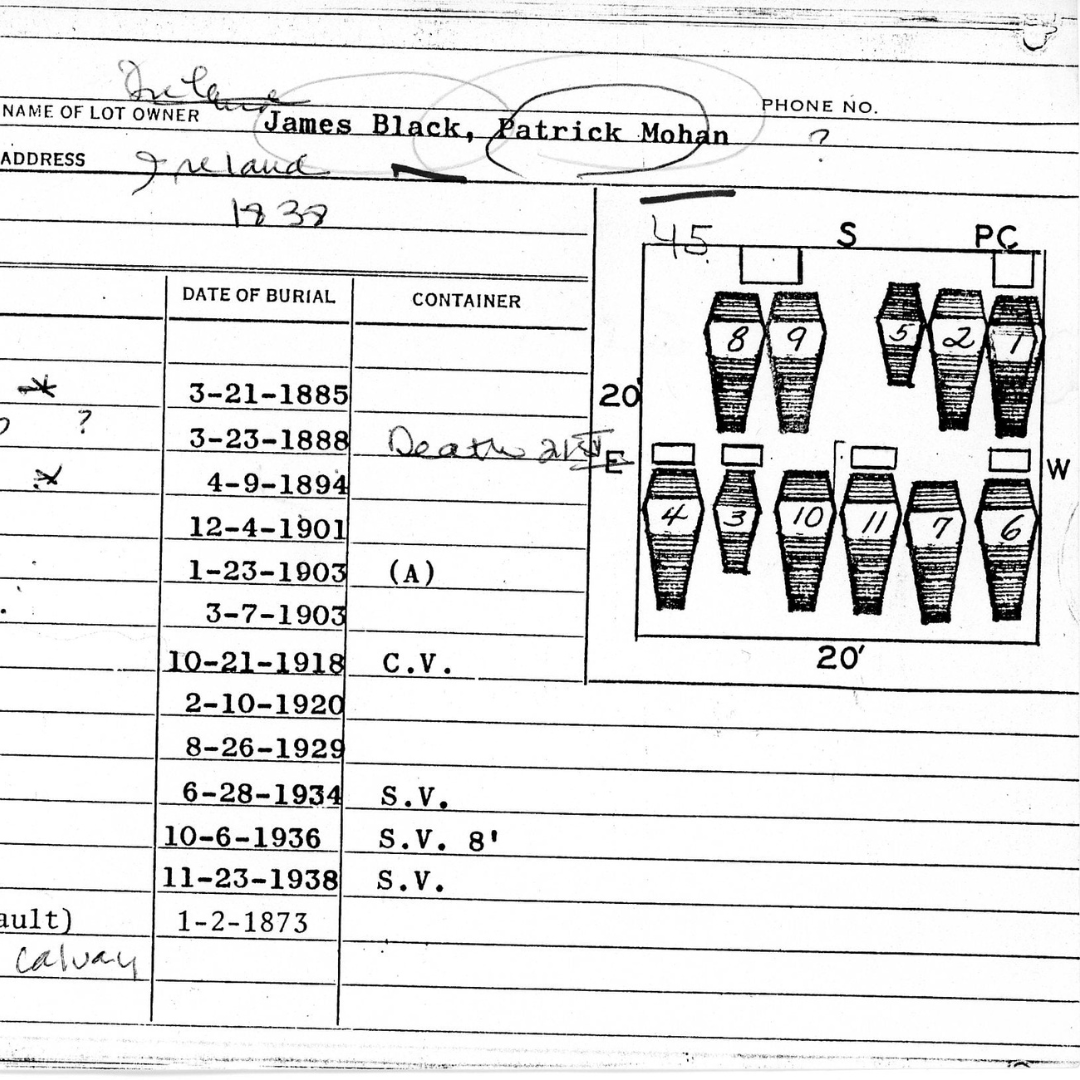
This week’s #FridayFind is… a cemetery plot?
Searching for an ancestor's headstone is a classic genealogical activity for good reason! Beyond death certificates and obituaries, cemetery records like plot maps and burial registers can reveal hidden family connections.

Tip #9: No matter how malevolent mold may seem, it’s not actually out to get you.
Mold is every archivist's nightmare, thriving in humidity and mild temperatures, feeding on our precious collections. Like a B-Movie monster, it lurks until the right conditions activate it, causing irreversible damage unless fully removed.

This week’s #FridayFind is… an event that happens only once every 365 days: December 3rd.
December 3rd marks the birthdays of Robert, Leonard, and Edward Thornhill—not triplets, but brothers born years apart on the same day in New Jersey. A remarkable coincidence for genealogical records!

Tip #8: Creepy crawlies won’t wait for an invitation to come for dinner.
Uninvited guests in archives, like bookworms (not actual worms!), can cause significant damage to collections. To prevent infestations, maintain stable temperature and humidity levels, and avoid crumbs, especially during the holidays!

This week’s #FridayFind is… an inmate who wasn’t an inmate.
Census records aren’t always straightforward—like when 7-year-old Osca Bischoff was listed as an “inmate.” In 1870, this term referred broadly to residents of places like hotels, orphanages, or asylums!

TIP #7: Not all dark stains denote an active mold infestation.
Foxing, the brownish-red discoloration on paper, is often debated as being caused by mold, oxidation, or other factors. While repairing it should be left to professionals, you can preserve the document by digitizing it and storing it in proper, buffered housing at low humidity.

This week’s #FridayFind is… a 19th century passport application!
Passports weren’t consistently required for U.S. travel until WWII, but Edward Gut’s 19th-century application highlights their utility. Instead of a photo, it included a written description—like having a “mouth, proportional”!

TIP #6: According to the National Archive of Australia, images on thermal paper can fade in as little as five years.
Light is a major threat to collection preservation, especially for thermal paper. Exposure to light causes fading or darkening of the ink, often seen on receipts. To protect such materials, store them in a cool, dry, and dark environment, and consider making photocopies on more stable paper.

This week’s #FridayFind is… a BOO-tiful wedding?
For Neil Parker and Mabel Beakley, Halloween 1927 wasn’t just spooky—it was romantic too! By then, the holiday was already a lively tradition, perfect for their memorable wedding day.

TIP #5: “Archival” is not a regulated certification and often misused for marketing purposes.
To determine if paper is archival quality, examine its composition. Paper made with lignin will turn acidic over time, causing it to become brittle and yellow. True archival paper is both acid-free and lignin-free.

TIP #4: Remember high school chemistry: buffer your acids.
Acidic paper, much like moths to fabric, can cause irreversible damage to your documents, making them brittle and discolored. To prevent this, use buffered materials like folders and paper to create a protective barrier.

This week’s #FridayFind is… a romance-loving priest?
Rev. Caesar Spigardi, known for arranging marriages in St. Louis’s Italian community, helped Italian workmen secure brides from their hometowns—often meeting for the first time right before the wedding!

This week’s #FridayFind is… a surname distribution map!
Surname distribution maps visualize where surnames appeared in a specific time and place, helping narrow down ancestral regions—though they’re less useful for common names or unrelated sources

TIP #3: Research the materials you’re handling before defaulting to wearing gloves.
Gloves may seem like the perfect solution to protect your collection, but it's more complicated than that. Consider the materials you're handling, dexterity, and safety concerns. Always wash your hands and do research before handling items.