Why Archives Should Track Statistics
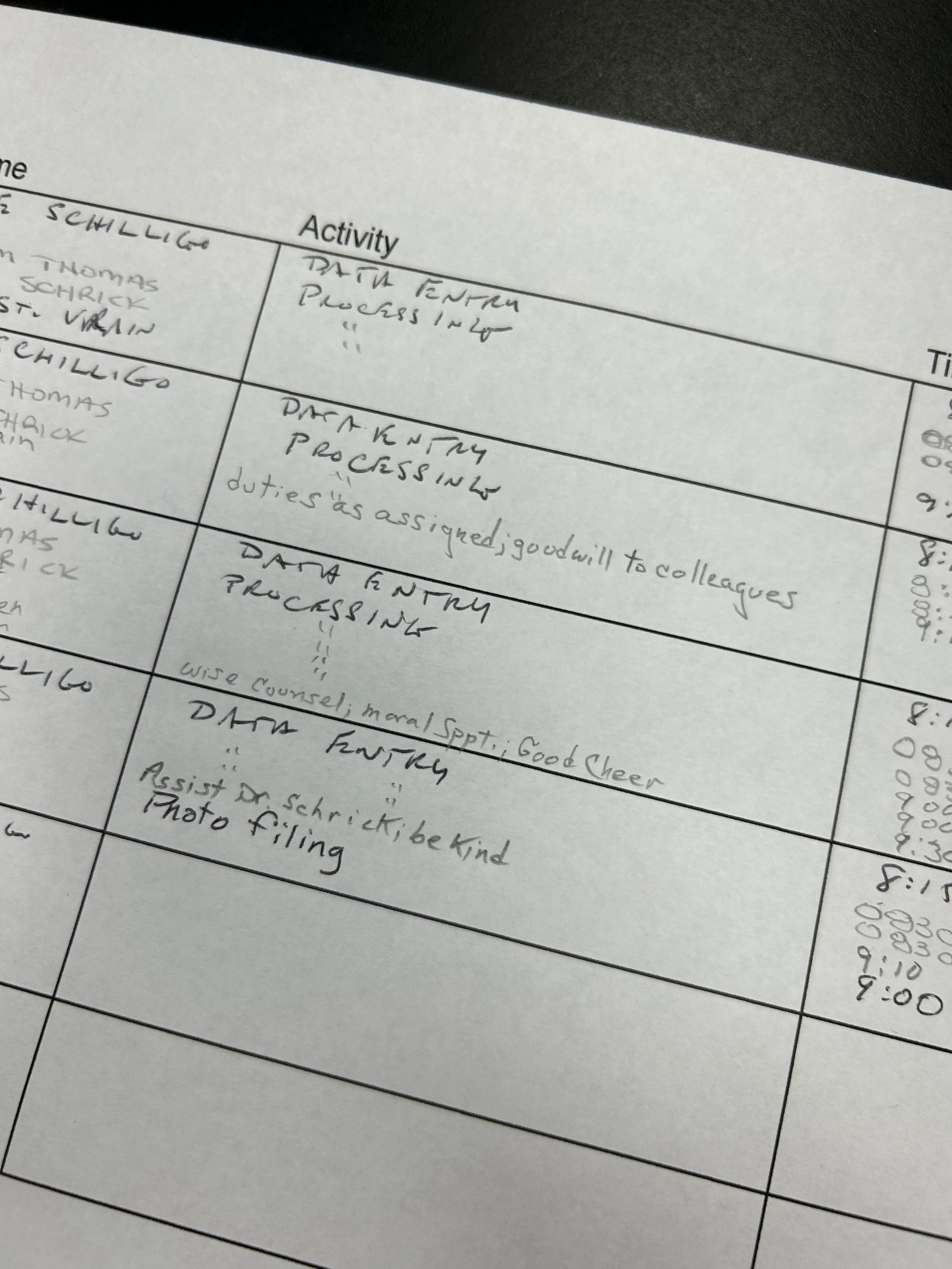
Keeping track of volunteer hours, research requests, and visitor statistics might sound like simple record-keeping, but it is actually one of the most important ways an archive can demonstrate its impact. Archives often operate with small budgets and limited staff, and the work that happens behind the scenes can easily become invisible to leadership or funding bodies. When you collect statistics consistently, you create a record that shows how people use the archive and how much work is being done every day.
These numbers become essential when reporting to your board, writing an annual report, or applying for grants. They also help you understand how people are interacting with your collections. Over time, patterns begin to emerge. You might notice that a particular collection generates most of your research requests, or that volunteer hours increase significantly during certain projects. Without statistics, those patterns remain anecdotal. With statistics, you can demonstrate them clearly.
A simple system for tracking these interactions ensures that even small activities are counted. When every research request, visitor interaction, and volunteer contribution is recorded, you begin to see the full picture of the archive’s outreach and influence.
What Information Should Be Recorded
Volunteer Hours
Volunteer hours are one of the most straightforward statistics to track, yet they are often overlooked. Many archives rely heavily on volunteers to process collections, assist researchers, or help with events, but the total contribution of those volunteers is rarely calculated.
Tracking volunteer hours can be very simple. A sign-in sheet near the entrance of the archive works well for in-person volunteers. Some organizations also maintain a shared spreadsheet that volunteers can access remotely, which is particularly helpful if volunteers work on digital projects from home.
At the end of each month, the hours contributed by each volunteer should be compiled. It is also helpful to record the projects or tasks that volunteers worked on. For example, a volunteer might have spent ten hours scanning photographs from a particular collection or helping process a set of records. Recording both the hours and the tasks provides a clearer understanding of how volunteer labor contributes to the archive’s work.
When annual reports are prepared, these numbers can illustrate just how generous volunteers have been with their time. A collection that might have taken months for staff to process was completed largely because volunteers donated hundreds of hours of labor.
Research Requests
Any question you receive from your archive counts as a research request. These requests can vary dramatically in complexity. Some questions can be answered immediately because the archivist already knows the answer. Others require extensive research that might take days or even weeks to complete.
When tracking research requests, it is helpful to record several pieces of information. In addition to the question itself, you should note the date the request was received and the date it was answered. Recording the method of communication is also useful, which might include email, phone, social media, or an in-person visit. If the question required consulting a specific collection, that collection should be noted as well.
Keeping this information allows you to see which collections are used most frequently and how much time is spent answering questions. Over time, these records can reveal which parts of your archive generate the most interest and which types of requests require the most staff effort.
Visitors
Tracking visitor numbers seems obvious, but many organizations fail to create a clear procedure for collecting this information. Someone might count the number of attendees during a tour or lecture, but the count is often written on a piece of paper that later disappears.
To avoid this, organizations should establish a consistent process for recording visitor statistics. Volunteers and staff should know exactly where to enter visitor numbers and when to record them. For example, after a tour or speaker event, the person responsible for the event might enter the headcount into a shared spreadsheet before leaving the building for the evening.
Creating this routine ensures that visitor numbers are consistently recorded and not lost.
Why These Statistics Matter
Annual Reports
One of the most common uses for archival statistics is the annual report. At the end of each fiscal year, many organizations prepare a report summarizing their activities for the board and membership.
Volunteer hours, visitor numbers, and research requests provide concrete evidence of how the archive is serving its community. These statistics allow you to highlight how much time volunteers have contributed, how frequently researchers use the collections, and how many people engage with programs and events.
Specific examples can further strengthen these reports. If material from your archive was used in a newspaper article, academic publication, or student research project, mentioning those outcomes demonstrates the broader influence of your collections.
However, these stories can only be told if the underlying data has been collected throughout the year.
Reports to the Board
Statistics also play an important role in internal decision-making. Regular reports to the board often include information about how the organization’s programs are performing and how resources should be allocated.
For example, if statistics show that eighty percent of research requests relate to one particular collection, that information can support a request for funding to digitize that collection. Digitization might significantly reduce the time staff spend retrieving materials while also allowing researchers to access those records online.
In this way, statistics help demonstrate not only what the archive is doing but also where investments could improve access and efficiency.
Future Grant Applications
Even if your organization does not currently have a grant opportunity in mind, collecting statistics now will make future grant applications much stronger.
Grant funders almost always want to understand the impact of the projects they support. They want to know how many people will benefit from a project and how the results will be measured. Without statistics, it can be difficult to demonstrate that impact.
If an archive cannot illustrate how its collections are used or how many people interact with its programs, the project may appear less compelling to funders. Keeping statistics allows organizations to demonstrate that their collections are actively used and that proposed projects will have a measurable outcome.
What Counts as an Interaction
When tracking statistics, it is helpful to remember that almost any interaction with a visitor or researcher can be counted.
Some libraries and archives even track what they call directional statistics, which include simple questions such as asking where the restroom is located. At one of my early GLAM jobs, we recorded every interaction with a patron, including questions about the location of the bathroom. While this might seem excessive, the reasoning behind it is simple. Each interaction represents a transfer of information between staff and visitors.
Tracking these interactions creates a more accurate picture of how people use the space and how frequently staff assist visitors.
It is also important not to judge the questions people ask. Some questions may seem unusual or unrelated to the collection, but they still represent an interaction.
Over the years, I have received some very unexpected questions, including one asking what type of horse a particular historical figure rode, and another asking about the difference between water polo and polo. These questions had little to do with the archival collections, but the person asking them was sincere and looking for information. Recording those interactions acknowledges that the archive served as a source of information, even if the question itself was unusual.
Tracking How People Contact You
When recording research requests, the method of communication is an important piece of information to capture. Knowing how people contact your archive helps you understand where your audience is finding you.
For example, if most research requests arrive through email, that suggests people are locating your contact information on your website. If many requests arrive via social media, it indicates your audience may be engaging with the archive on those platforms.
Social media, in particular, can be easy to overlook as a source of research questions. Comments and direct messages often contain requests for information that might otherwise go unrecorded. Even though social media communication is informal, these interactions still represent researchers reaching out to the archive.
When I worked in a university archives, I was listed in several official directories where students could contact me for research assistance. Despite those formal channels, many students preferred to send questions through Instagram direct messages. These questions were often related to assignments, and they still required time and effort to answer.
Phone calls should also be recorded. It is easy to answer a quick question over the phone and forget the interaction entirely. Keeping a small pad of paper near the phone or entering the request directly into a spreadsheet can help ensure those interactions are documented.
Email requests should also be tracked carefully. Sometimes a research question is hidden within a longer conversation, and it can be easy to overlook that the interaction should be recorded as a research request.
Finally, some research questions arise during in-person visits. If a visitor asks a question that requires follow-up research or consultation with collections, that interaction should be logged as well.
Why Consistency Matters
The most important aspect of keeping archival statistics is consistency. The system used to record information does not need to be complicated. A simple spreadsheet or log can be sufficient as long as everyone involved in the archive understands how and when to record interactions.
Over time, these records become a powerful tool for demonstrating the archive’s value. They show how volunteers contribute their time, how researchers engage with the collections, and how the archive serves the broader community.
Without statistics, much of this work remains invisible. With them, the archive can clearly demonstrate its impact every day.