New NEH Collections Stewardship Grants for Archives, Museums, and Libraries
The National Endowment for the Humanities (NEH) has restructured its grant-making programs and introduced a new Collections Stewardship grant. This is a substantial funding opportunity for museums, archives, libraries, historical organizations, colleges, universities, and other institutions responsible for humanities collections.
You can review the full program information on the NEH Collections Stewardship grant page.
What is the NEH Collections Stewardship grant?
The Collections Stewardship grant supports projects that preserve physical and digital humanities collections and make them available for research, teaching, and public engagement.
The first application deadline was May 11, 2026. The next application deadline is December 15, 2026, and NEH anticipates making the application materials for that cycle available on August 31, 2026.
The grant has a long lead time. Organizations applying in December 2026 should expect to receive a funding decision in July 2027. Funded projects may begin between November 1, 2027, and February 1, 2028, and organizations may request a project period of up to three years.
That timeline can feel incredibly far in the future, but it also gives organizations time to build a thoughtful project rather than trying to solve every collections problem at once.
How much funding is available?
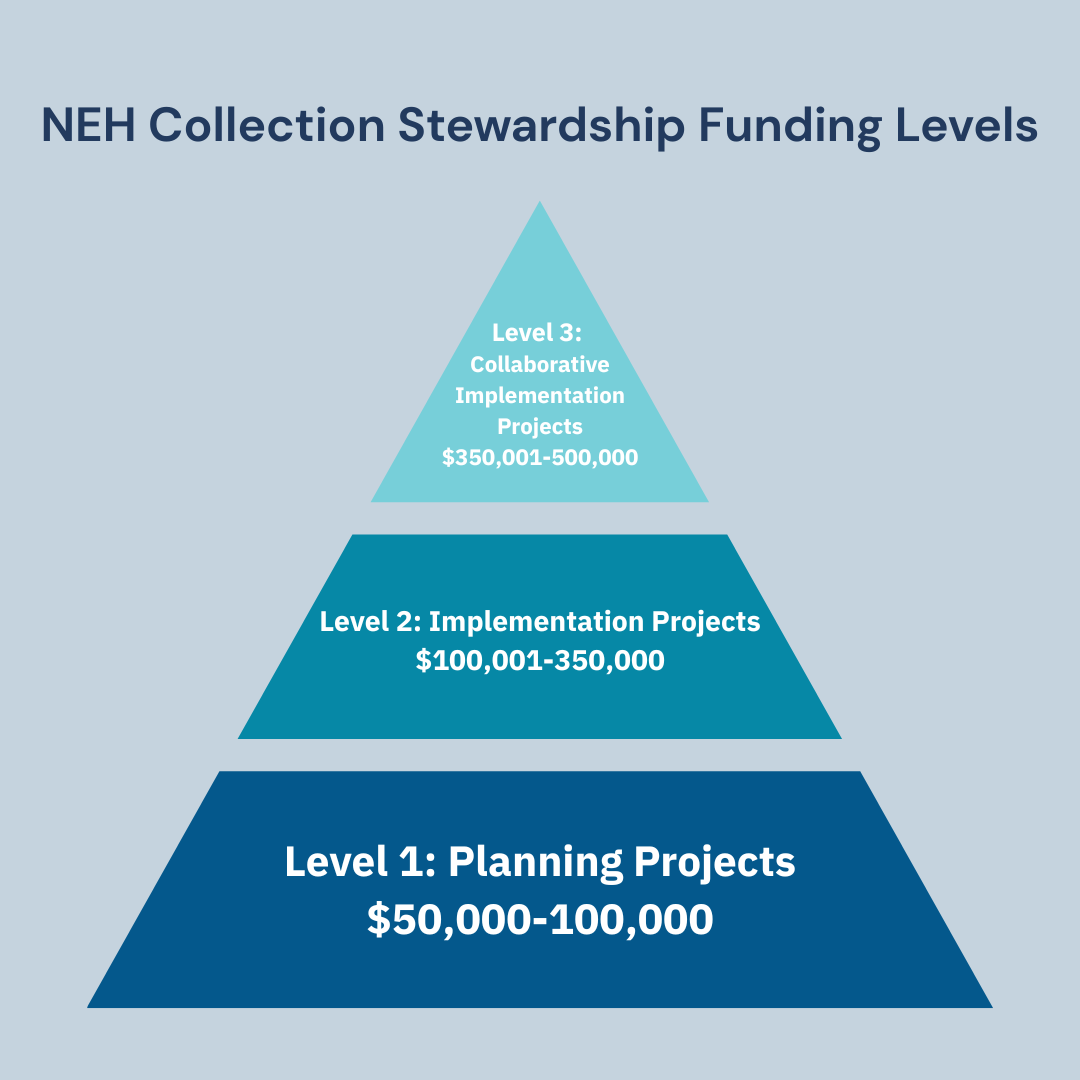
The NEH Collections Stewardship program has three funding levels.
Level 1: Planning Projects
Organizations may request between $50,000 and $100,000 for assessments, planning, policy development, pilot projects, and other foundational collections stewardship work.
Level 2: Implementation Projects
A single organization may request between $100,001 and $350,000 to implement a collections preservation, processing, cataloging, digitization, or access project.
Level 3: Collaborative Implementation Projects
Projects involving more than one organization may request between $350,001 and $500,000. One organization must serve as the applicant, with the other participating organizations included as project partners.
No cost share or matching funds are required.
How does this compare with previous NEH grants?
This new program covers work that was previously distributed across several NEH funding opportunities. It is not a perfect one-for-one replacement, but organizations searching for examples of previously funded projects may want to look under these former program names:
Preservation Assistance Grants for Smaller Institutions, which offered up to $10,000 to organizations in the contiguous United States. Organizations in noncontiguous states and jurisdictions could request additional funding for consultant travel and shipping.
Humanities Collections and Reference Resources, which offered planning grants of up to $50,000 and implementation grants of up to $350,000.
Sustaining Cultural Heritage Collections, which offered planning grants of up to $50,000 and implementation grants of up to $100,000 or $350,000, depending on the project level.
Preservation and Access Education and Training, which offered grants of up to $350,000 for professional education, field services, assessments, and training related to humanities collections.
One significant change is that the new Collections Stewardship grant begins at $50,000. It is therefore not a direct replacement for the former $10,000 Preservation Assistance Grant. Smaller organizations will need to consider whether they have a project large enough to support a $50,000 request or whether they should develop a broader planning project with several related components.
What can the Collections Stewardship grant fund?
Eligible projects may include:
Physical or digital preservation assessments
Collections stewardship plans and policies
Conservation assessments and treatment
Archival arrangement and description
Cataloging and metadata creation
Digitization and reformatting
Digital preservation planning
Storage and preservation supplies
Collections rehousing
Environmental monitoring and preventive care
Transcription, translation, and indexing
Training and educational programs for collections professionals
Pilot projects that prepare an organization for future implementation work
The program can support both planning and implementation, which means an organization does not need to have every detail figured out before considering the grant. A Level 1 project can help an institution assess its collections, define priorities, create policies, develop workflows, test a proposed approach, and build a realistic plan for future work.
Who is eligible to apply?
Eligible applicants include:
501(c)(3) nonprofit organizations
Accredited public or nonprofit institutions of higher education
State and local governments and their agencies
Federally recognized Native American Tribal governments
Individuals, for-profit businesses, and foreign organizations cannot apply directly. An eligible organization can, however, include consultants and vendors in its project team and grant budget.
Projects must involve humanities collections that will be regularly accessible for research, education, or public engagement. Access may be provided online, through on-site research, by interlibrary loan, or through duplication when appropriate. NEH allows reasonable limitations related to the condition of the materials, copyright, privacy, donor restrictions, and cultural considerations.
For government applicants, it is also important to distinguish archival collections work from records management. State and local governments are eligible applicants, but the grant does not support records management projects for those governments.
Start planning before the application opens
Before the May deadline, we received several requests for proposals from organizations interested in partnering with Backlog on their NEH grant applications. Unfortunately, we were unable to work with a few of those organizations because they reached out too close to the deadline.
As with any major grant application, we recommend planning a few months in advance.
It takes time for us to prepare a proposal that can meaningfully contribute to an NEH application. We tailor every proposal to the organization, its collections, and the work that actually needs to be completed. Even when we provide similar services for multiple clients, such as archival needs assessments, the scope of each assessment is different.
Before developing a proposal, we schedule a phone call or Zoom meeting to learn about the collection, the organization, and its goals. We also ask organizations to send photographs of the collection and storage areas so we can better understand the materials, space, and approximate scope.
An organization does not need to know exactly what the final project should be before that call. During our conversation, we can identify pain points, discuss what is currently preventing the collection from being used or properly cared for, and determine what work would create the most meaningful improvement.
How Backlog can support an NEH Collections Stewardship project
Backlog can partner with organizations on services including:
Collections stewardship and archival needs assessments
Collections management policy development
Accessioning and deaccessioning procedures
Collection development policies and workflows
Processing, arrangement, and description manuals
Archival inventories and processing pilot projects
Finding aid and description projects
Preservation and rehousing plans
Storage supply and equipment recommendations
Disaster preparedness and collections emergency response plans
Digitization assessments and planning
Digital preservation planning
Born-digital collections policies and workflows
Procedures for incorporating new physical and digital collections
Staff training and the development of sustainable collections workflows
Backlog is a for-profit consulting firm, so we cannot serve as the direct applicant. We can, however, serve as a project consultant or vendor and provide a detailed scope of work, project timeline, budget, qualifications, and letter of commitment for inclusion in an eligible organization’s application.
To discuss partnering with Backlog on an NEH Collections Stewardship grant, shoot Emma an email at emma@backlog-archivists.com. We will start by scheduling a 45-minute phone call or Zoom meeting to talk through the collection, the work that needs to be completed, the grant timeline, and what information you will need from us for the application.
Visit our NEH Collections Stewardship page for more information.