Hands-On History for Academic Anniversaries
Academic anniversaries give schools and universities a built-in opportunity to look back at their history and find new ways to use their archival collections. Rather than simply publishing a list of important dates or displaying a few historic photographs, an anniversary can invite students, alumni, faculty, and staff to engage directly with archival materials.
Students can use photographs, documents, publications, and audiovisual materials to create interactive exhibits, timelines, then-and-now comparisons, and other projects that show how the institution and campus have changed over time. Anniversary programs can also create new materials for the archives through oral history interviews with alumni, faculty, staff, and other members of the school community. These projects make institutional history more hands-on while leaving behind new resources that can continue to tell the school’s story.
Then and Now Comparisons
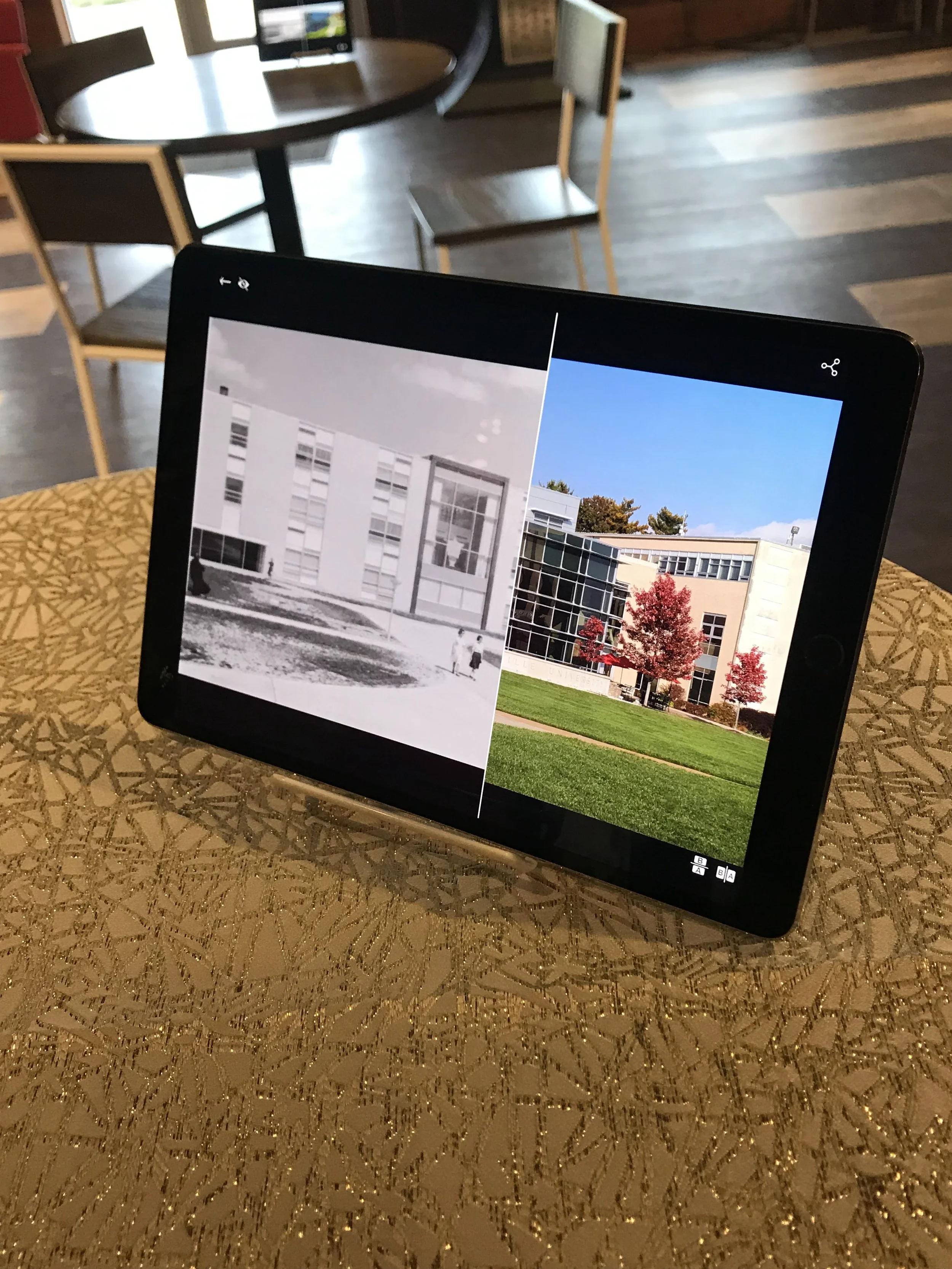
Northwestern University’s Knight Lab is an interdisciplinary hub that develops innovative tools for digital storytelling and journalism. Its Juxtapose tool allows users to overlay two images and compare them. Students could also compare photographs of libraries, cafeterias, gyms, or other shared spaces across different eras.
Exhibiting archival materials – either original materials in protected cases or reproductions mounted on walls – allows visitors to learn a narrative while walking through space. These exhibits can do more than decorate a space. Exhibits in the library or at other locations during campus events can bring history back to life.
Student and alumni perspectives can bring to light lesser-known aspects of the institution’s history. An example of a centennial exhibition is the New School’s In The Historical Present exhibition from 2019.
Digital exhibits offer the opportunity to bring in community members who are unable to come to campus. These can be as simple as pages added to a website or a LibGuide, such as Kents Hill School’s 200 Years of Excellence or Presidio School’s Celebrating 100 Years, or more complex digital exhibits constructed with specialized software such as Omeka.
Interactive Timelines
Knight Lab has a Timeline tool that can be embedded into a public-facing website.
An example of this tool in action is a timeline created for Madonna Buder, a Maryville University alumna. Madonna was a nun who took up triathlons late in life and was even featured in a Nike campaign. Sister Madonna had donated her trophies to the University, and the school wanted to showcase them and tell her life’s story with them. The archives added quirky quotes from Madonna in the caption of each photograph. An oral history taken previously and hosted on YouTube was embedded in the timeline so visitors could hear Madonna’s story in her own words.
Phillips Exeter Academy published an Academy Chronology with lists of not only events but also significant people in the school’s history. Other possible reference materials could be graduation years of significant alumni, timelines of graduation speakers, or dates of building construction.
Alumni Connections
Alumni are an excellent source of institutional memory. Archival collections will spark memories for alumni, and they can provide context and metadata by identifying individuals in photographs.
The archives can host or participate in events as part of alumni gatherings, homecomings, or reunions, providing opportunities for alumni to browse photographs and add stories. Large reproductions of photographs could be posted on boards or placed on tables with pens and Post-Its, or could serve as bases for sparking oral history projects. The archives can also work with offices that manage the school’s social media to regularly post photographs and seek information or stories about the individuals and events that they capture.
The archives could also use a Web form to collect alumni stories and preserve the responses as part of the collection.
Oral History Interviews
The anniversary offers an opportunity to institutionalize a more formal and ongoing oral history program. This would involve pulling together existing recordings and identifying key people with comprehensive and insightful perspectives that would enhance the institution’s story. State humanities councils often provide funding for this type of project. The recordings and transcriptions can be accessed through LibGuides, StoryCorps, or other digital platforms.
StoryCorps
StoryCorps offers a structured way to record and share oral histories. Its DIY program provides training and support for creating a collection of recorded conversations, which can be preserved through StoryCorps and the Library of Congress. Students or an alumni organization could lead the project by interviewing alumni, faculty, and other members of the school community.
https://storycorps.org/participate/storycorps-diy/
High school classes could produce oral histories, reaching out to alumni and faculty. To support Social Studies and Language Arts faculty, there are a number of resources for using oral history in the classroom. The NEH offers resources for teachers. This includes an excellent guide to integrating oral histories into the classroom.
https://edsitement.neh.gov/teachers-guides/oral-history-educational-experience
How Backlog Can Help
Backlog does not design or produce exhibitions, but we help institutions build the archival foundation that makes these projects possible. We organize and steward collections so that students, staff, alumni, and exhibit designers can find and use archival materials in meaningful ways. We also create digital preservation plans to help ensure that oral histories, digital exhibits, and other materials created for an anniversary are still accessible for the next centennial.