How to Start an Archive When You Inherit a Mess
Walking into an archival space that is already full can feel paralyzing. There are boxes stacked in corners, binders slumping on shelves, mystery USB drives in desk drawers, and no clear map of what any of it means. The instinct is to start organizing immediately. Resist that instinct.
When you inherit a backlog, your first job is not to make it look neat. Your first job is to stabilize what is at risk, document what exists, and build a foundation that someone else could understand if you were not there to explain it. Archives are long-term systems. They cannot rely on a single person’s memory.
This is where you start.
Start with triage, not organizing
Your first pass through an archival space is not about rehousing everything into perfect containers. It is about identifying active threats and stopping ongoing damage.
Some problems need immediate action:
Boxes that are crumbling, collapsing, stained, or actively harming the material inside
Mold or pest evidence
Containers with obvious acidity, unstable inks, dyes bleeding, or sticky residues
Materials stored in ways that physically stress them (for example, tightly packed slides splitting at the edges, film popping out, folders slumping because the box is too large)
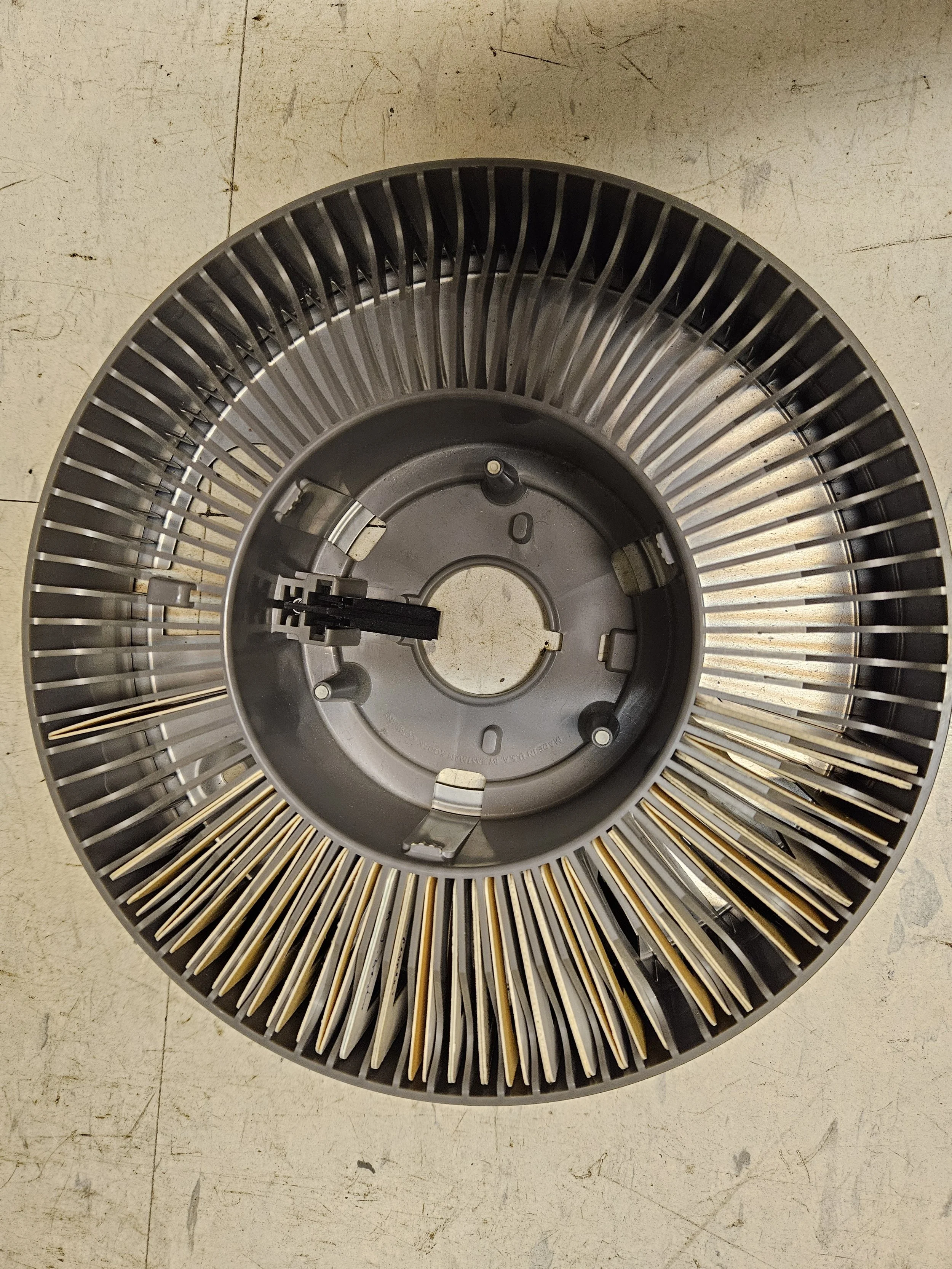
If a box is failing and causing damage, replace the container now. That is basic stabilization, not a full housing survey. If you encounter mold or signs of pests, isolate those materials immediately and contact a qualified specialist. Do not “clean it up” casually, and do not spread contamination across the space by moving items around the building. Full-scale evaluation of housing quality across the entire collection can come later. Early on, you are allowed to be practical. You are not required to solve everything at once.
The key is to make triage decisions while you inventory, so you do not create two separate projects that fight each other. You can note “replace later” issues while you work, but do not let “later” work prevent you from making the quick, common-sense moves that stop damage today.
Location systems come before databases
Before you enter a single location into a spreadsheet, database, or collections management system, decide what you are calling the space and how locations will be structured. This is one of the most important early steps because changing it later is miserable.
Pick a consistent, legible coordinate system that a new person could follow without being trained by you. The point is not to find the perfect method. The point is that it is consistent and documented.
A practical structure looks like this:
Building → Room → Row/Aisle → Bay/Unit → Shelf
Your terms can vary. “Row” might be “Wall.” “Bay” might be “Section.” The labels do not matter as much as the consistency. Once you decide, label shelves and storage units so the location code is visible in the physical world, not just in your head. The outcome you want is simple: if someone has a location listed in the inventory, they can walk into the space and find it.
If you are still experimenting with the most logical layout, do that experimentation before you start entering locations into your tracking system. Otherwise, you will spend weeks correcting your early decisions.
Build an inventory that supports decisions
An inventory is not just a list of titles. It is a planning tool. If you inventory in a way that supports future decisions, you will save yourself time when you start budgeting, prioritizing processing, planning digitization, writing finding aids, and making the case for staffing or storage improvements.
At a minimum, record:
The location code
A short description of the contents
The container type and size (record carton, Hollinger, flat box, binder, etc.)
Preservation concerns (or the absence of concerns)
Any cross-references to older work, donor paperwork, or known catalog records
Recording box type and size matter more than people think. Later, you will need to estimate the extent, space needs, and supply costs. “We have 120 letter-size archival boxes and 400 record cartons” is actionable information. It lets you do real math. It also helps you spot inefficiencies, such as a half-empty box that could be moved to a slimmer container that better supports the material and frees up shelf space. Those small housing improvements can occur during inventory, especially when they are quick wins.
Preservation notes belong in the inventory even when they are not urgent. “Metal edges popping off,” “box crushed,” “photos curling,” “binder rust,” “strong odor,” “possible water staining.” If it does not meet the triage threshold, it should still be included in your documentation. Future you will thank yourself.
Do not waste past work, even if it is imperfect
Many repositories have had someone touch the material before, even if only briefly. Old inventories, lists, partial databases, donor folders, accession notes, exhibit research files, and finding aids are often fragmented. Use them.
When you inventory, cross-reference prior records rather than ignoring them. Add notes like:
“Mentioned in 1996 inventory”
“Deed of gift located”
“Matches legacy box list”
“Appears in prior catalog record, number unknown”
It may take time to understand the logic of a predecessor’s spreadsheet. That time is usually worth it because it prevents duplication and helps you recover context that would otherwise be lost.
Build provenance and object files to protect ownership and authenticity
Provenance is not optional paperwork. It is the backbone of ownership, authenticity, and institutional memory. As you begin, gather every scrap of information you can find about how material arrived: gifts, transfers, purchases, deposits, office transfers, auction receipts, correspondence, board minutes, emails, anything.
Then build a provenance or object file for each collection or acquisition event. This is not part of the public-facing archival collection, and it does not need to be tracked like a series in your finding aid. Internal documentation helps you answer basic and high-stakes questions later: Where did this come from? Do we have legal ownership? Was it acquired ethically? Is this the full chain of custody? What conservation work has been done? What restrictions were agreed to?
Institutional knowledge matters too, but memories are unreliable. Treat people’s recollections as clues, not proof. Capture what staff know, then backfill documentation where you can. It is also acceptable not to have an answer. What matters is that you can show what you do know and where it came from.
Define what counts as “archives” in your building
Many collections become messy because different types of materials are mixed together by subject. You might find original photographs and letters stored alongside photocopies, printouts, research notes, internet articles, exhibit drafts, and internal reference files. That is common, and it causes long-term confusion because research on the material begins to masquerade as the material itself.
Separate reference and internal research from archival collections of primary sources. Keep primary sources primary.
Maintain fonds. Materials with different origins should not be mixed simply because they share a topic. If the mixing occurred long ago and you can no longer confidently separate the origins, be explicit about this in the finding aid. Call it what it is: an artificial collection assembled by a person or department, with uncertain original relationships. Being honest is better than implying a provenance that does not exist.
Most organizations end up needing more than one “bucket” of information:
The organization’s own institutional archives, meaning records that document the organization’s history and operations
Historical or special collections, meaning primary source material collected from outside creators
A reference library of non-rare material that supports research, exhibits, or internal work
That last category is often a relief. Not every book belongs in the archives. If materials are handled frequently and are not rare, a circulating or reference library structure can reduce wear on archival areas and reduce confusion about which materials are subject to archival rules.
Numbering is allowed to be messy, but it cannot be undocumented
Numbering systems tend to accumulate like tree rings. One person numbers by collection, another by year, another by object type, another by box, and suddenly you have overlapping schemes that conflict.
Before you invent something new, audit what exists:
What kinds of numbers appear?
What do they mean?
Do they overlap or conflict?
Are they tied to accessions, collections, items, or locations?
Are there legacy numbers that still need to be maintained?
You might decide to establish a new system going forward without renumbering the entire past. That is normal. Old outliers can remain if you document how the new system works and verify it does not collide with existing identifiers.
It can also be useful to separate accession numbers from collection numbers. An accession describes the transaction, meaning who transferred it, when, and under what terms. A collection number describes the group of materials as an intellectual unit. One collection can receive multiple accruals over time, meaning separate accessions that become part of the same collection.
If you receive new material that belongs with an older collection, you have options. You can accession it under the current accession convention while adding it to the existing collection description and finding aid. You can also create a consistent “extension” method if your institution prefers that. What matters is consistency and clear documentation. Write down the rules, then follow them. Future staff need to know what you meant, not guess what you might have meant.
Media needs item-level attention, not “box of tapes”
Audiovisual and digital media are often treated like an afterthought, inventoried as “a box of DVDs” or “media” and left at that. That creates problems later because media formats fail, degrade, and become obsolete in ways paper does not. You cannot plan digitization, preservation, or access if you do not know what you have.
Inventory media by content and carrier. In plain terms: what it is about and what it is physically stored on.
In your inventory, capture:
Format (VHS, cassette, reel-to-reel, DAT, CD, DVD, external hard drive, USB)
Any labeling that indicates content, date, creator, or series
Quantity and basic condition notes
Known playback needs or obsolescence issues
This is also how you avoid paying twice for work that already happened. It is common to discover that audio was copied from cassette to DAT, then to CD, then to files. If you inventory only “tapes,” you might assume you need to digitize everything. If you inventory carriers and content, you can spot previous migrations and focus your budget where it is needed.
Not every repository needs its own media lab. Sharing equipment with neighboring institutions is often the most cost-effective option, especially for obsolete formats. Partnerships can also become community-building opportunities. The goal is access and preservation, not owning every piece of hardware.
After digitization, do not throw out originals. Digital files are fragile in different ways. Storage fails. Files corrupt. Hard drives disappear. Keeping original carriers, stored properly, preserves the possibility of future re-digitization with better tools and protects you if digital storage fails.
External digital media, such as USB drives, also require control. Assign identifiers to the physical media, track their contents in a spreadsheet, and make redundant copies in your managed storage. “Lots of copies keep stuff safe” is not a cute slogan. It is essential for the survival of born-digital materials. Labels can be simple, even hand-written if needed. The point is that they do not vanish into a drawer and become untraceable.
When you develop digitization file naming conventions, keep them boring and consistent:
Use leading zeros so files sort correctly (001, 002, 010, 100)
Avoid special characters, punctuation that confuses systems, and apostrophes
Avoid spaces if you can, use underscores or hyphens consistently
Include meaningful identifiers like collection or record group, series, and a sequence number
Write a brief memo that explains the structure so everyone follows it the same way
You do not need expensive software to be “professional”
A spreadsheet can be a perfectly acceptable system for inventory and descriptive control, especially at the beginning. If you want a “professional realm” baseline for fields, you can use an established schema like Dublin Core and implement it in columns. A spreadsheet has real advantages: it is easy to learn, easy to share, and easy to export later into a database when you are ready. It also reduces the risk of being trapped in a tool you cannot maintain or cannot extract data from.
If you have multiple material types, you can manage complexity with multiple tabs or separate sheets. You can also link out to shared drive locations, existing finding aids, or digitized files. The important thing is that the data is structured, consistent, and documented.
Build a collection management policy once you know what you have
After you have inventoried enough to understand the contours of the collection, you can start shaping the scope. A collection management policy is where you define what you collect, why you collect it, how you acquire it, and how it aligns with the mission and research or community needs your organization intends to serve.
Start by describing the collection as it exists, not as you wish it existed. Then identify what it needs to serve: local history, genealogy, institutional accountability, public programming, exhibit development, legal compliance, internal memory, or some combination. From there, you can decide whether to expand scope, narrow scope, or clarify boundaries between archival collections and reference resources.
This is not a policy you write alone in a vacuum. Confirm it with your organization’s governance or leadership. You want the policy to protect you later, especially when someone wants to donate materials that do not fit, or when staff want the archives to become general storage.
Access can start small, but it should start
Archives exist to be used. You do not need a full digital collections platform to begin access, and you do not need a perfect reading room to begin communicating what you have.
Early access can be as simple as a page on your organization’s website describing:
That the archives exists
What broad categories of material are held
What kinds of questions you can reasonably answer right now
How to contact you
What response time to expect
Set expectations based on real capacity. If you are part-time, if you have other duties, if you are still inventorying thousands of feet, say so in a professional way. The point is not to discourage use. The point is to avoid creating a demand you cannot meet.
Make it easy for people to communicate with you asynchronously. Encourage email. Researchers often want scans, links, short written answers, and follow-up information. Email makes that possible and reduces the phone-tag loop that wastes time on both sides.
Your access policy can evolve. You might start with staff-mediated reference, limited scanning, or appointments only. Later, as space and staffing improve, you can expand researcher visits, set up dedicated work tables, and refine security procedures.
Plan for the future while you are still in the weeds
Once you can see the collection clearly, even partially, you can start planning for what comes next:
Supply and staffing budgets
Disaster preparedness, starting with a basic phone tree and response plan
Processing priorities
Digitization priorities and workflows
AV and obsolete media conversion strategies
Grant planning for projects and programs
Intern, volunteer, or staff growth plans
Outreach to communities that would use the materials
Records management improvements for institutional records
A full disaster plan can feel overwhelming, but a basic action sheet is achievable and extremely helpful in a crisis. If you have a leak, you do not want to be inventing procedures while panicking. Even a simple “who to call, in what order, where supplies are stored” document is progress.
Records management is also part of a functioning archive, especially for organizations collecting institutional records. It is rarely a day-one task, but it is always a future task. The sooner you begin thinking about how records move from working files to retention and then to either archives or disposal, the sooner you can reduce the chaos that created the current backlog.
Keep your own history while you build the archives
While you are learning the collection, build timelines. Timelines help you date and contextualize materials, especially photographs and records without clear labels. Organizational timelines, local history timelines, construction dates, leadership changes, and key events tied to your collections. This kind of reference work speeds up description and research support and makes them more accurate. It can also become public-facing later, like an interactive timeline or exhibit, but even if it never does, it strengthens your internal understanding of the material.
Equally important is documenting what you are doing now. The establishment of an archives is itself an event worth recording. Keep a simple log of interventions, decisions, and policy changes. It can be a bullet journal, a monthly report, or a running document in a shared drive. Write down what you moved, what you separated, what you re-housed, what numbering rules you adopted, what policies you drafted, and what you discovered about past work.
Archives outlast staffing continuity. People leave. Grants end. Volunteers stop. Budget priorities shift. When continuity is broken, undocumented archives lose information quickly. Your documentation is how you protect the next person from having to start over.
A short reading list and a practical next step
If you want more structured guidance on inventorying and solo-archivist realities, two strong resources are:
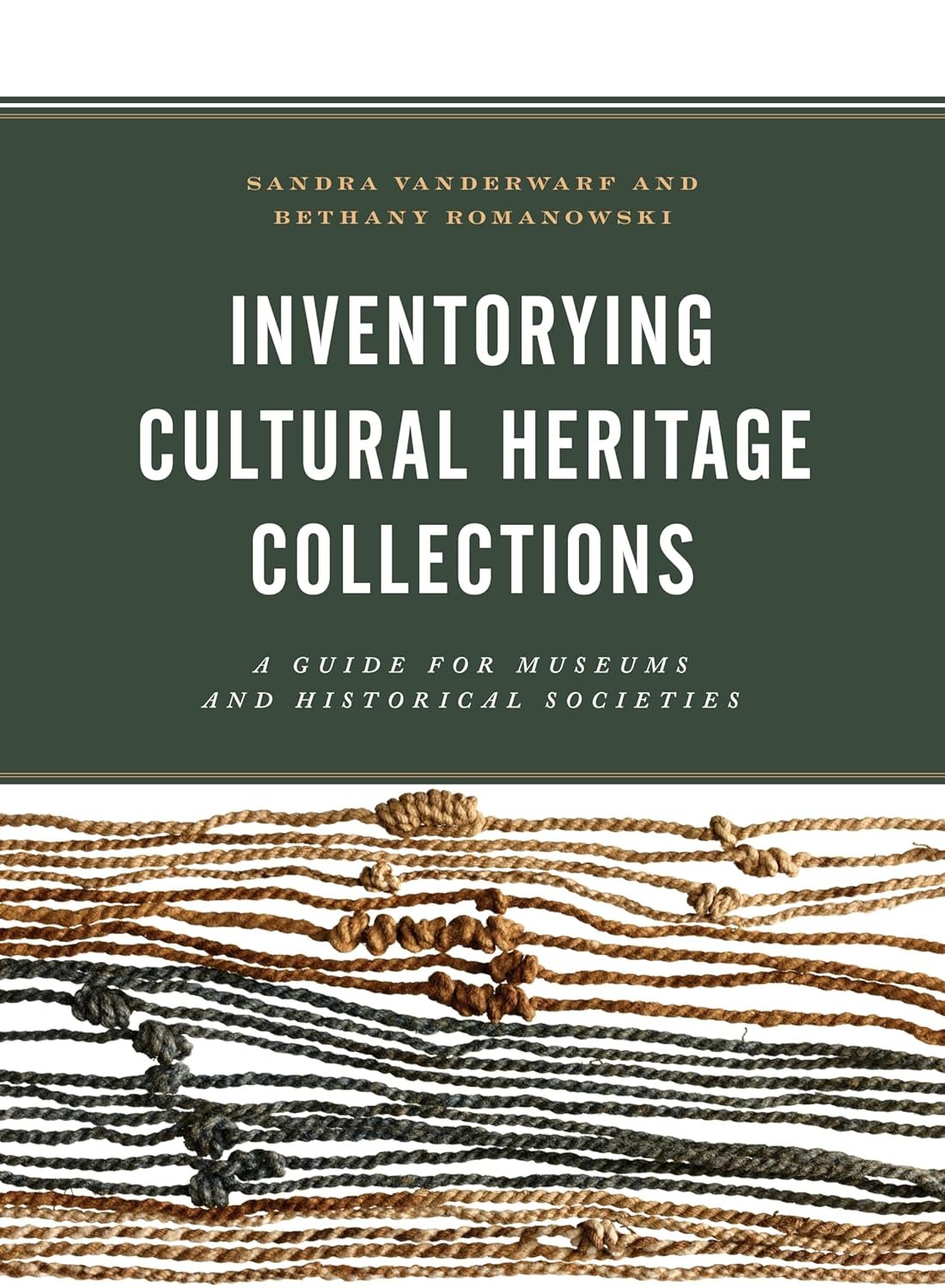
Inventorying Cultural Heritage Collections: A Guide for Museums and Historical Societies by Sandra Vanderwarf and Bethany Romanowski
Alone in the Stacks: Succeeding as a Solo Archivist by Christina Zamon
Also, do not build in isolation. Connect with regional cultural heritage groups, library and archives associations, and neighboring institutions. If there are not many nearby, discussion lists and professional forums can fill that gap. Practical problem-solving improves fast when you have peers who have already made the mistakes you are about to make.
If you are standing in the room right now and you want a concrete “tomorrow morning” starting point, do this: label the space and draft your location coordinate system before you touch the boxes. Then start an inventory spreadsheet that captures location, container type, brief contents, and triage notes. That combination creates immediate control without forcing you into premature reorganization.
Want to learn more? Watch our Archives Basics webinar here: