

Archival consulting for museums, nonprofits, and local governments.
Backlog helps organizations assess, organize, and manage their archives and records—from practical plans and policies to hands-on processing and ongoing support.
Archives and records consulting, from strategy through implementation.
Backlog is an archives and records consulting firm based in St. Louis, Missouri. Founded in 2021 and led by Certified Archivist Emma Prince, Backlog works with museums, nonprofits, universities, religious communities, and local governments to care for physical and digital collections.
Our archivists help organizations decide what needs attention, create workable procedures, and carry out the work.
What Backlog can help you do
Assess your archives and plan the work
Archival needs assessments examine collections, storage, access, staffing, and current practices. Deliverables can include a collection survey, preservation priorities, and a phased action plan.
Organize and describe collections
Archival processing includes inventories, arrangement, rehousing, and description. We develop processing plans, box and folder lists, finding aids, and archival descriptions so people can find and use materials.
Manage records and establish policies
Records management consulting helps staff understand what to keep, how long to retain it, and when to transfer it to the archives. We develop retention schedules, transfer procedures, collections policies, and emergency plans.
Plan digital collections and support staff
We help with digital preservation planning, metadata, ArchivesSpace mapping, and system migrations. Training, staff coaching, and ongoing archival support help organizations put plans into practice.
Examples of our archival consulting work
Oklahoma City National Memorial & Museum
An archival needs assessment led to ongoing planning, policy development, and staff support. The case study documents team milestones including the migration of 250+ photo CDs and the labeling of 398 archival storage boxes.
First Division Museum
Following an archival assessment, Backlog worked with the museum’s curator to develop access and use, digitization, and collections management policies grounded in the team’s existing workflows.
Carmelite Sisters of the Most Sacred Heart of Los Angeles
A 2023 archival needs assessment addressed storage, preservation, organization, and digital access. Four follow-up sessions helped the archivist work through supplies, shelving, housing, and implementation.
Bernard Becker Medical Library
At Washington University School of Medicine, Backlog’s arrangement and description work focused on two collections: the Institute for Biomedical Computing Records and the Jerome R. Cox, Jr., Papers.
Questions about hiring an archival consultant
Can a small museum hire an archival consultant?
Yes. Backlog provides project-based archival consulting and ongoing support for museums, including organizations with limited staff. A needs assessment, a processing plan, or targeted staff training can provide a manageable starting point.
What does an archival needs assessment include?
Backlog reviews the materials you hold, their organization and condition, storage, access, staffing, and existing practices. The resulting report identifies priorities and practical next steps, with a scope tailored to your organization.
Can Backlog help with records retention schedules?
Yes. Backlog develops records retention schedules and related procedures to help organizations manage active records and transfer material of lasting value to their archives.
Do you work with organizations outside St. Louis?
Yes. Backlog combines on-site work and remote support for organizations across the United States. Our published projects include museums and religious archives in Oklahoma, Illinois, California, and Missouri.
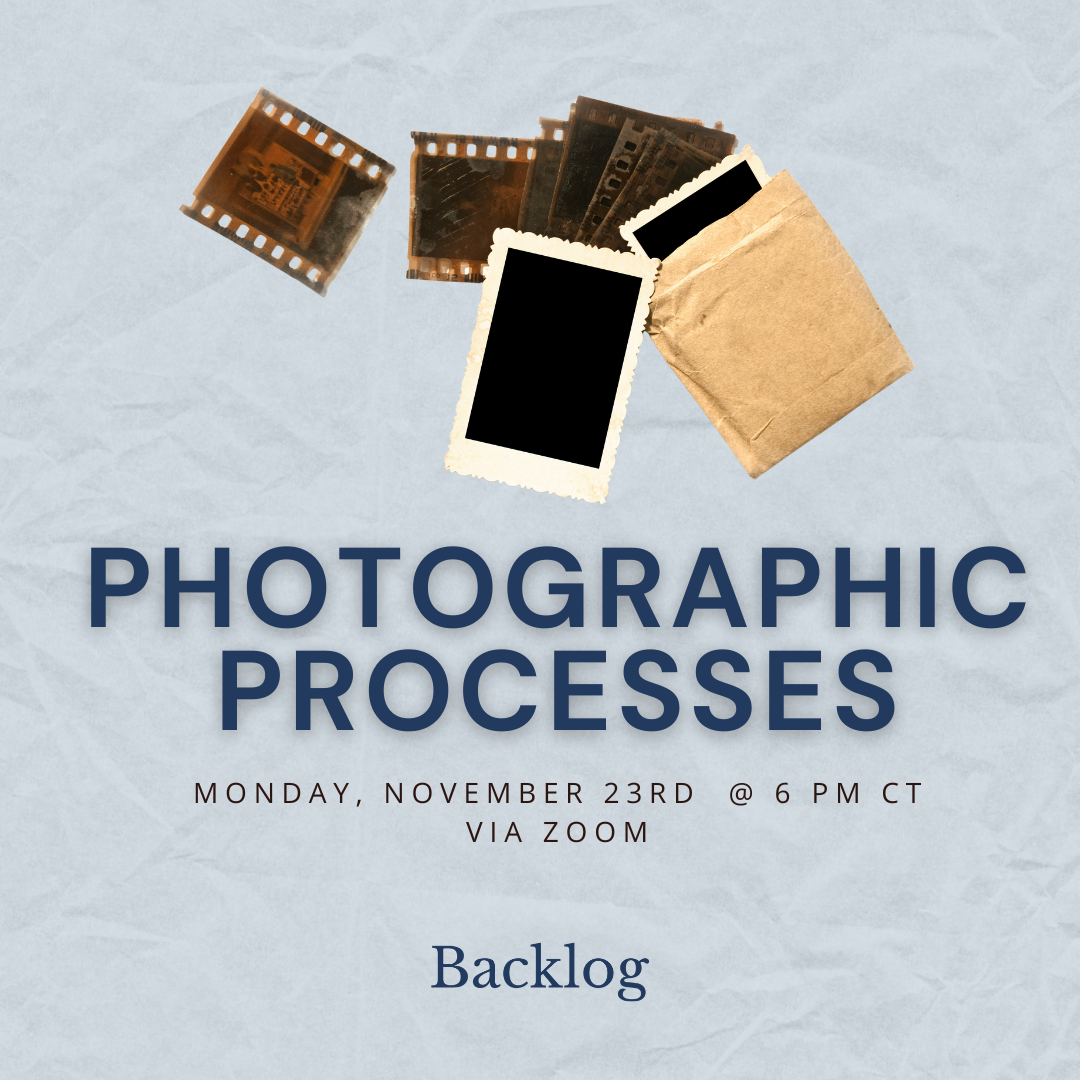
FREE WEBINAR
Photographic Processes
Photographs can take many different forms, and the process used to create them can affect how they should be handled and stored. This webinar looks at photographic processes used over nearly two centuries, from early nineteenth-century formats through more modern materials.
We’ll also discuss how to identify different photographic processes in your collection, what physical characteristics to look for, and the storage materials and enclosures best suited to preserving them.
Monday, November 23rd @ 6 pm CT via Zoom.