
From Creation to Archives: Understanding the Records Lifecycle
Every archive begins long before a box is labeled or a digital folder is organized. It begins at the moment a record is created.
One of the most common questions we hear from institutions is simple: why do some records end up in the archives while others do not? The answer lies in understanding the lifecycle of a record. Records are not static objects. They move through stages. Their purpose shifts. Their value changes. And at each stage, decisions must be made.
If you want to build a sustainable archives program, you have to understand that lifecycle from beginning to end.
What Is a Record and Why Does It Matter
A record is information created, received, or maintained in the course of business or legal activity. That includes reports, emails, contracts, spreadsheets, policies, meeting minutes, photographs, and more. Format does not matter. Paper, PDF, database entry, or text message can all qualify.
What makes something a record is not its aesthetics or permanence. It is its role as evidence.
Records document decisions, transactions, obligations, and actions. In a business setting, they support strategy and operations. They provide data for forecasting and analysis. They demonstrate compliance during audits or legal proceedings. In an archival setting, they preserve institutional memory and provide accountability and transparency. They allow future researchers to understand what happened and why.
Strong recordkeeping practices protect organizations on both fronts. They maximize the value of useful information while minimizing risk.
The Role of the Record Retention Schedule
Keeping track of every record created by an organization can feel overwhelming. Without structure, records accumulate in file cabinets, shared drives, email inboxes, and cloud platforms until no one knows what is essential and what is obsolete.
This is where the record retention schedule becomes essential.
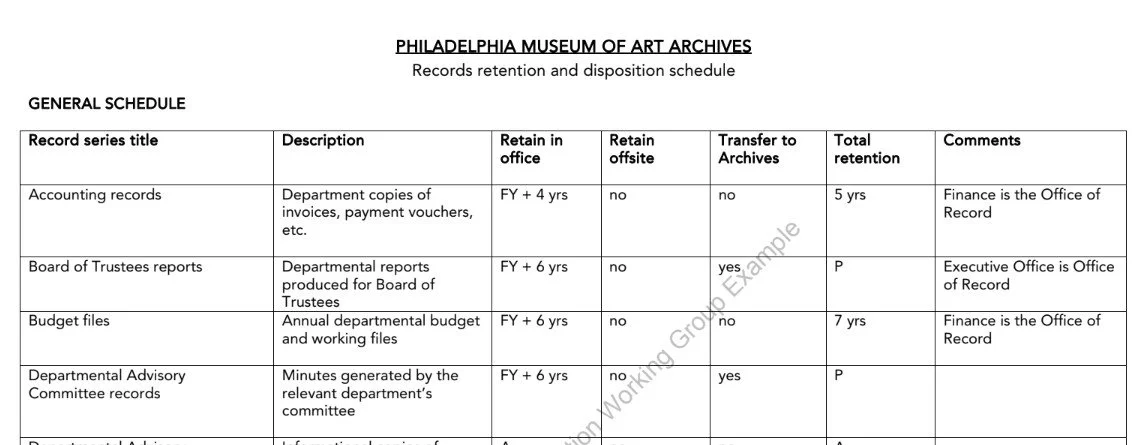
A retention schedule is a comprehensive list of record categories that identifies how long each category must be kept and what should happen at the end of that period. It tells you when a record should be destroyed and when it should be preserved permanently. It aligns operational needs with legal and regulatory requirements. It creates predictability in a process that otherwise becomes reactive and chaotic.
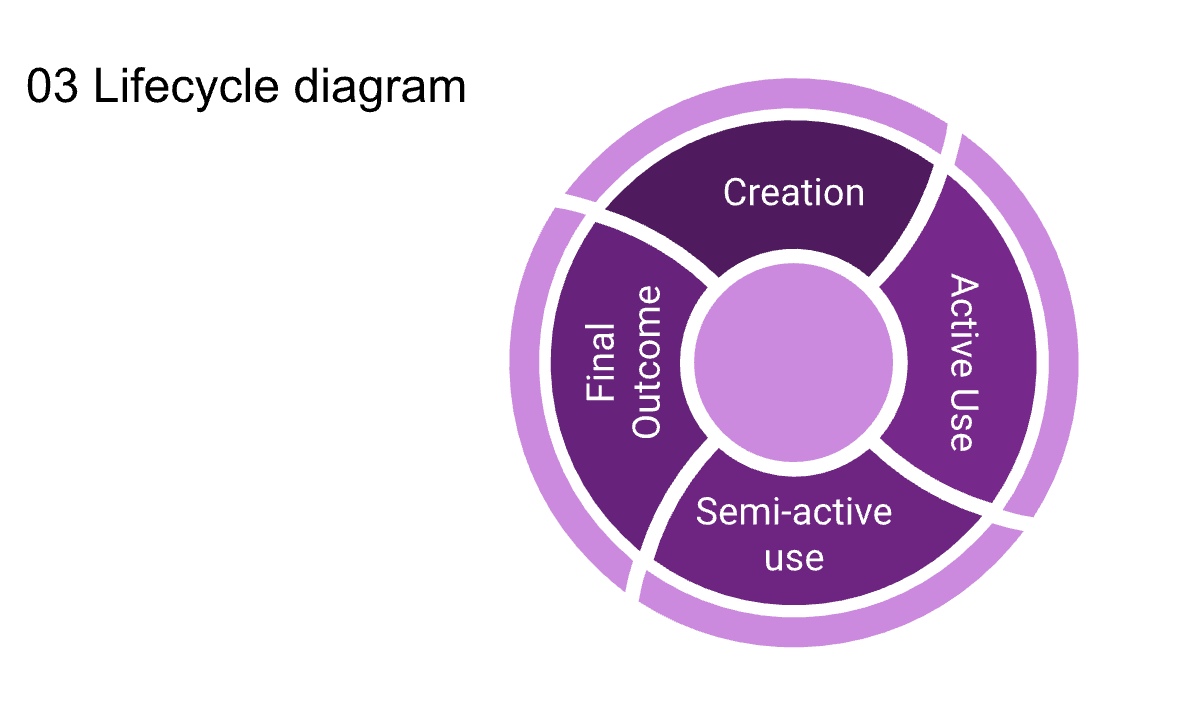
Retention schedules are built on the understanding that records have lifecycles. Once you see records as moving through stages rather than sitting in place forever, management decisions become clearer.
Stage One: Creation
The lifecycle begins at creation.
Creation is the moment a record is born. It starts with planning. Before a document is drafted, an email is sent, or a report is generated, someone has already decided why that information needs to exist, who it is for, and in what format it should be captured. Even when this planning feels automatic, it is still happening.
Once the idea is formed, the record is captured in a specific format. That format might be a contract, a spreadsheet, a press release, a directive, or an internal memo. The structure chosen at this stage affects how the record will function throughout the rest of its lifecycle.
Stage Two: Active Use
After creation, a record enters active use.
During this phase, the record is frequently referenced and directly tied to ongoing operations. It has a defined purpose and clear users. Because it is accessed regularly, it is typically stored in a location that prioritizes ease of retrieval.
Integrity is critical during active use. If revisions occur, those changes must be tracked. If versions are created, there must be clarity about which version is authoritative. Without controls, even actively used records can become unreliable.
Stage Three: Semi Active Use
Eventually, most records move into semi active use.
This stage is often overlooked and is the most vulnerable point in the lifecycle. The record is no longer referenced daily, but it cannot yet be destroyed. It may still be required for legal, financial, regulatory, or reference purposes.
In practice, this is when boxes migrate to closets and folders drift into forgotten directories. Without a structured plan, semi active records are easily misplaced. Yet this is the stage where retention schedules matter most. Employee records, payroll files, tax documentation, contracts, invoices, and financial statements often live here for years before their retention period expires.
A well managed semi active phase protects organizations during audits and litigation. It also prevents unnecessary accumulation. The goal is controlled storage, not indefinite hoarding.
Stage Four: Final Disposition
The final stage of the lifecycle is disposition.
When a record reaches the end of its retention period, a decision must be made. There are only two options. The record is destroyed, or it is preserved permanently.
Destruction is appropriate when the record has fulfilled its operational, legal, and regulatory purpose and has no enduring value. In many cases, destruction is not only permitted but required. Retaining certain categories of information beyond their mandated period can create liability.
Permanent preservation is reserved for records with enduring value. These may include materials with historical significance, records documenting major decisions, foundational governance documents, or materials central to an organization’s mission and identity.
Different types of archives will preserve different types of records. A corporate archive may prioritize regulatory compliance and key business milestones. A community archive may preserve correspondence, oral histories, photographs, activism materials, and ephemera such as flyers and brochures. The mission of the institution determines what has enduring value.
Why You Should Not Keep Everything
In the digital age, storage feels infinite. Cloud platforms make it easy to keep everything. But more is not better.
Excess information increases risk. Outdated drafts can be mistaken for current versions. Duplicate files create confusion about which document is authoritative. Retaining sensitive information beyond required periods can expose an organization to legal and regulatory consequences.
Over retention also increases cost. Physical storage requires space and environmental controls. Digital storage requires secure systems, backups, and long term maintenance. Reducing unnecessary records reduces operational expense.
Most importantly, disciplined disposition supports compliance. Some records are legally required to be destroyed after a defined period. Failing to do so can place an organization in violation of regulations.
Effective records management is not about saving everything. It is about saving the right things.
Legitimacy, Authenticity, and Accountability
Tracking records throughout their lifecycle does more than create order. It strengthens legitimacy.
Records serve as documentary evidence. Courts, auditors, and regulators rely on them to verify claims and reconstruct events. When records are accounted for at every stage, their authenticity and reliability are easier to demonstrate. When they disappear and reappear without documentation, their credibility can be questioned.
Maintaining clear documentation of a record’s history, including metadata and version control, reinforces trust. For governmental bodies and highly regulated industries, this is foundational infrastructure for justice and accountability.
Lifecycles in the Digital Age
The digital environment complicates the lifecycle.
Today’s organizations produce both structured and unstructured data. Structured data includes information organized within predefined formats such as spreadsheets, databases, and CSV files. Unstructured data includes emails, text documents, social media posts, PDFs, images, audio files, and message transcripts.
Digital records are easy to duplicate, edit, and store in multiple locations. This raises critical questions about what constitutes the official version. If a report exists in three shared drives and two personal desktops, which one is authoritative? Without clear governance, version confusion undermines integrity.
Many organizations address this challenge by implementing enterprise content management systems. These platforms centralize both structured and unstructured content. They support version control, manage permissions, track changes, and facilitate workflows. When configured properly, they reinforce retention schedules and clarify which records are masters and which are duplicates.
Digital complexity does not eliminate the lifecycle. It makes lifecycle management more urgent.
Building a Sustainable Foundation
Understanding the records lifecycle is not theoretical. It is operational.
Creation requires intention. Active use requires integrity. Semi active storage requires discipline. Final disposition requires courage and clarity. Throughout all stages, retention schedules provide structure and accountability.
Archives do not begin with boxes. They begin with decisions made at the moment of creation. When organizations understand that every record is moving toward an outcome, they can design systems that support compliance, reduce risk, preserve history, and strengthen institutional memory.
Want to learn more? Watch our webinar here:
